
Best Mealtime Tools for Older Toddlers + Preschoolers
2-5 Years
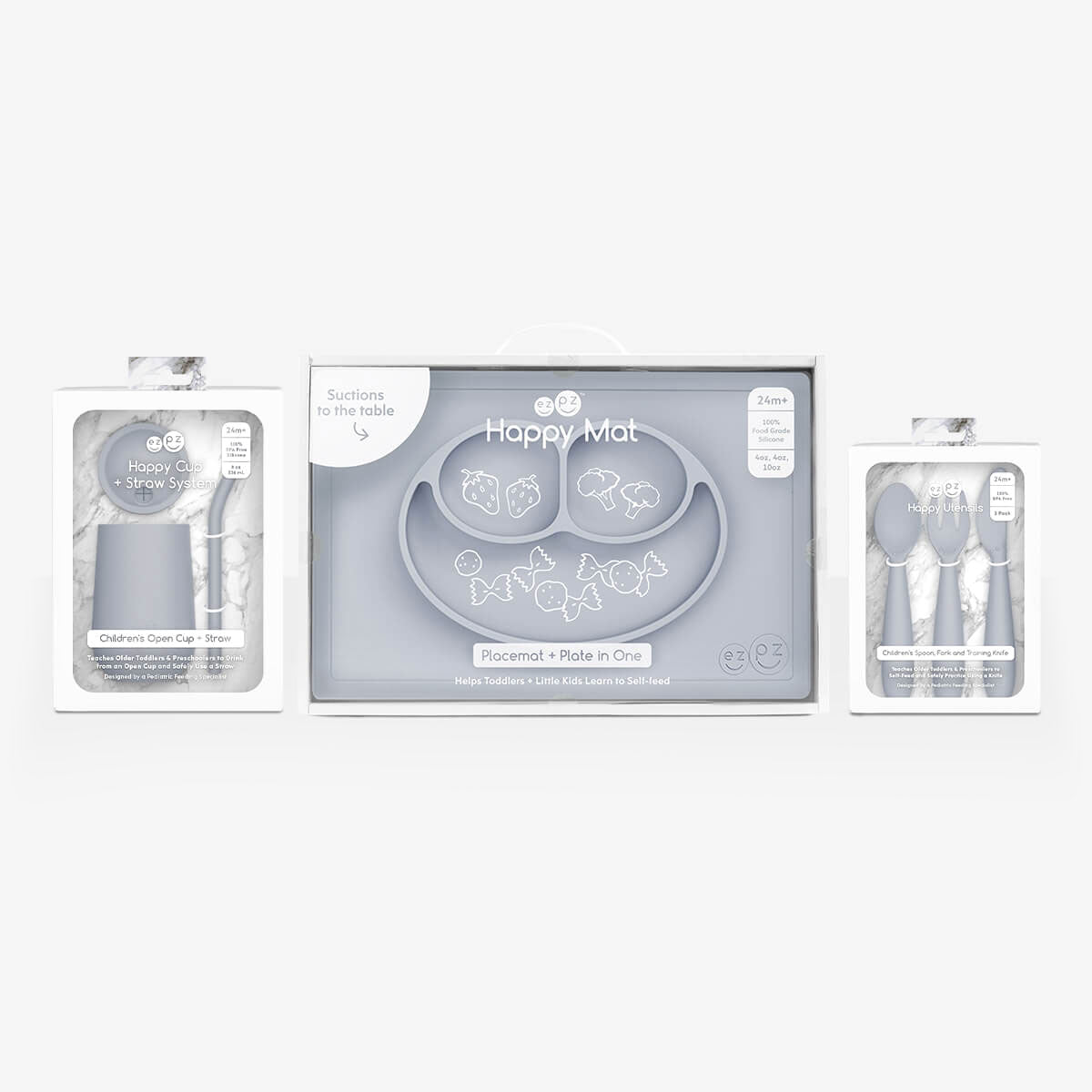
As toddlers grow into preschoolers, mealtime becomes a key opportunity to foster independence, fine motor skills, and self-feeding confidence. The Happy Collection includes plates, cups, and utensils that help children practice scooping, piercing, cutting, and more advanced straw drinking.





Frequently Asked Questions
What mealtime milestones should I expect between 2 and 5 years old?
Between 2 and 5 years old children are working toward key mealtime milestones including scooping effectively with a spoon, piercing food with a fork, spreading and cutting soft foods with a training knife, drinking independently from both an open cup and a straw cup, and biting through a variety of food textures. This is also the stage where the pincer grasp continues to develop and refine, and children begin to engage in pretend play and imaginative food exploration that supports their willingness to try new foods. Having the right tools sized specifically for this age group makes practicing and achieving these milestones much more successful.
When should a toddler start learning to use a fork, spoon, and knife independently?
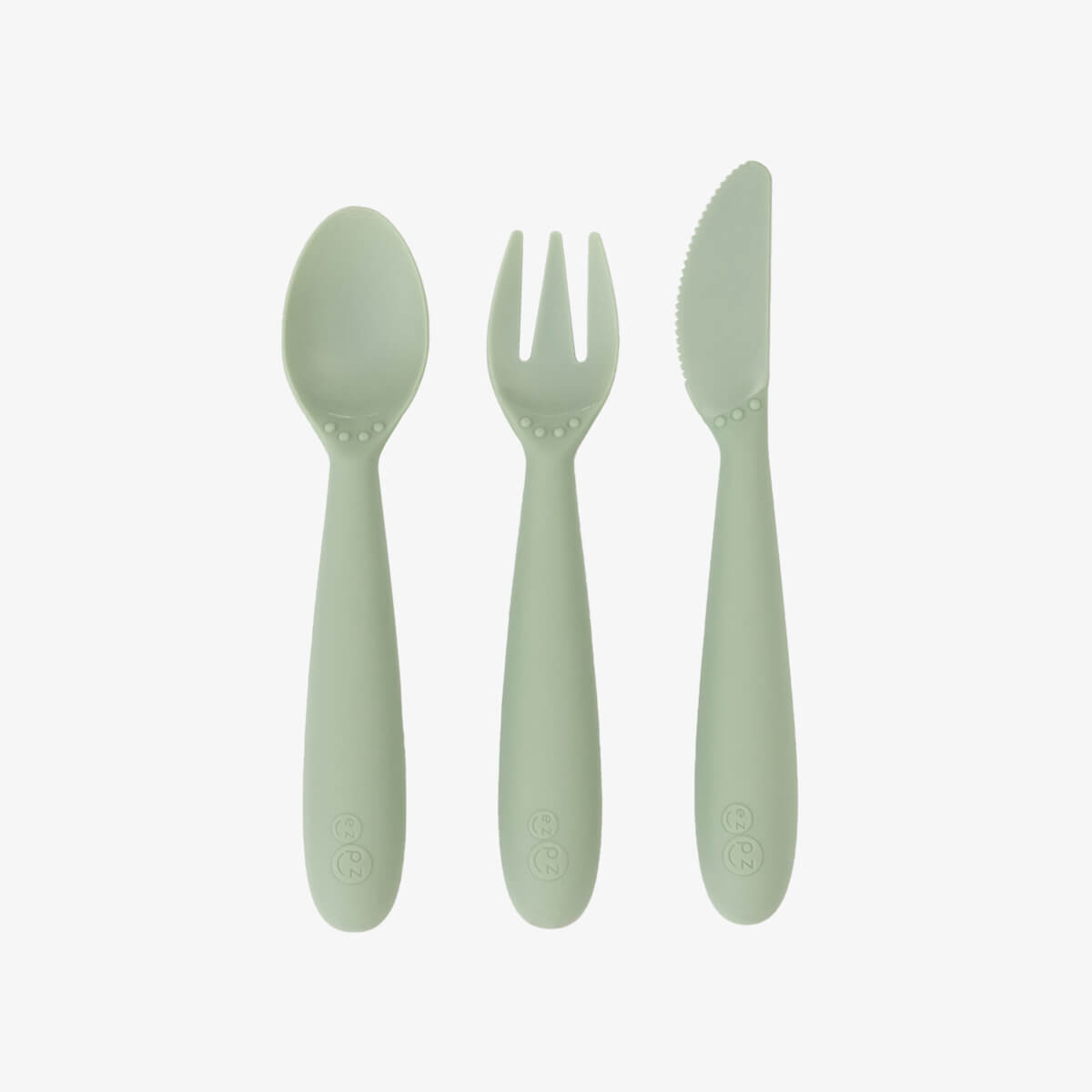
Most toddlers are ready to begin practicing with a spoon and fork consistently around 24 months, especially when they have had regular exposure to utensils during mealtime. Once a toddler is proficient with a spoon and fork, they are ready to begin learning to spread soft foods like hummus or cream cheese with a training knife - a milestone that typically emerges around their second birthday. The ezpz Happy Utensils are designed specifically for this stage, with silicone handles that make grasping easier and a non-slip training knife that makes spreading and cutting safer for little hands.
What are the best plates and bowls for preschoolers practicing self-feeding?
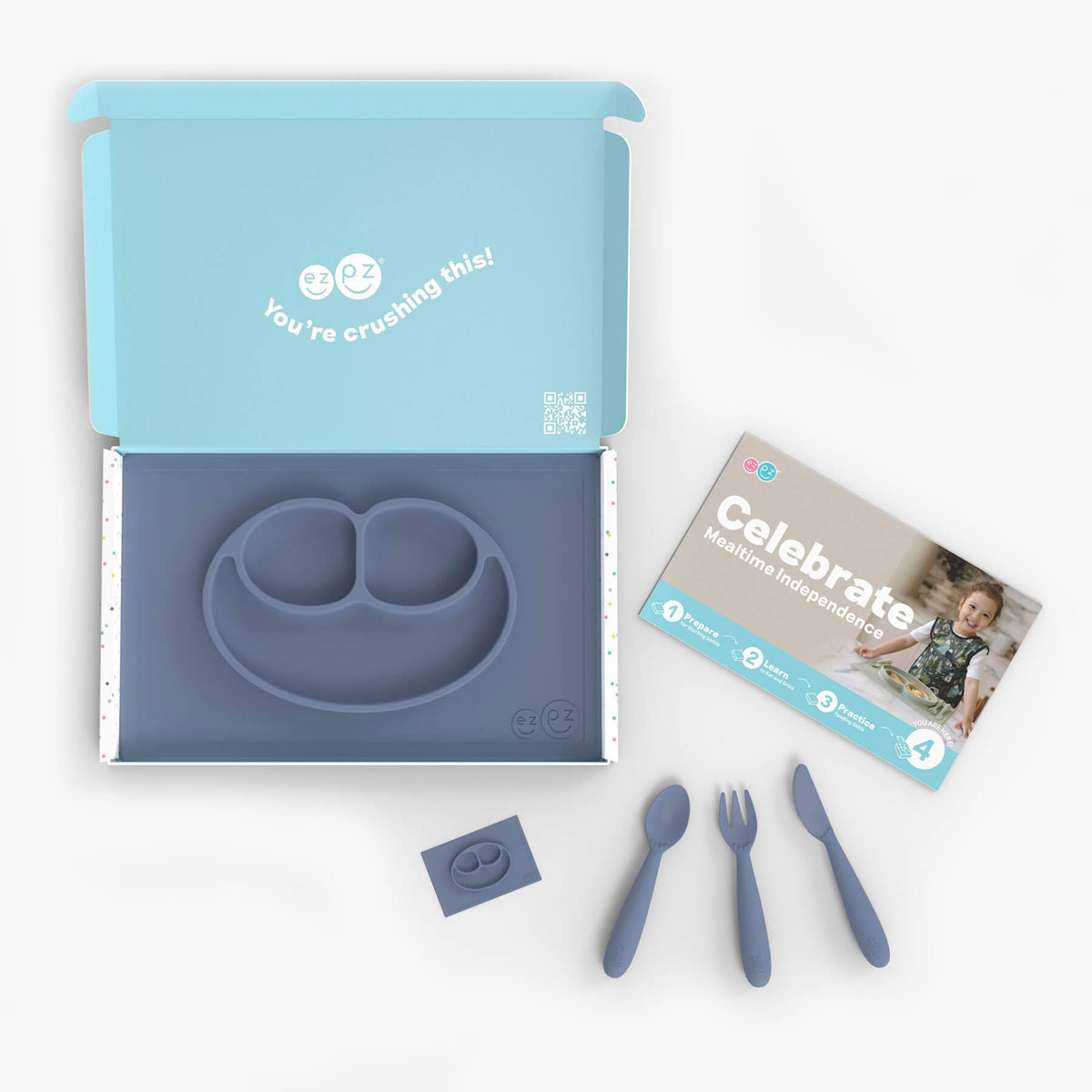
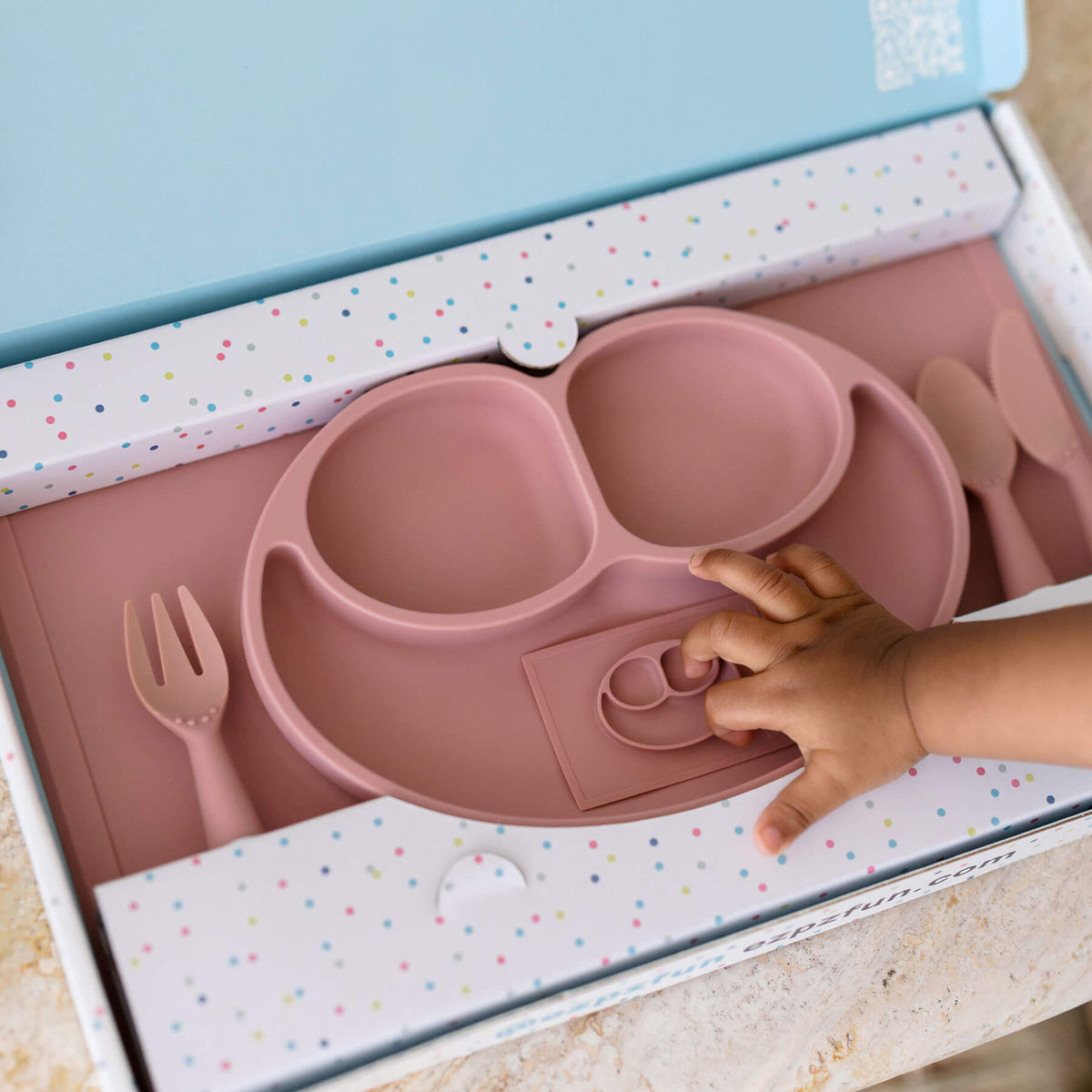
The ezpz Happy Mat and Happy Bowl are both designed for children 24 months and older and are ideal for preschoolers who are building self-feeding independence. The Happy Mat is an award-winning all-in-one placemat and plate that suctions to the table, capturing the mess and preventing tipped plates so toddlers can focus on eating rather than managing their tableware. The Happy Bowl seals to the surface in the same way and is perfectly sized at 12 ounces for soups, pasta, oatmeal, and other toddler and preschooler favorites.
How do I make mealtime more fun and less stressful for toddlers and preschoolers?
One of the most effective ways to make mealtime more enjoyable for toddlers and preschoolers is to incorporate pretend and imaginative play into the meal itself. Something as simple as arranging yogurt and blueberries in the Happy Mat's eye compartments and cut-up waffle pieces in the smile compartment can turn breakfast into a fun, face-shaped meal that excites even the most reluctant eater. Involving your child in small kitchen duties - like filling their Happy Bowl with cereal or choosing their fruit - also builds a sense of ownership over their food that can be a real game changer for reducing picky eating tendencies.
How do I encourage a picky toddler or preschooler to try new foods at mealtime?
Toddlers and preschoolers are naturally cautious about new foods, but consistent, low-pressure exposure is one of the most effective tools for expanding their palate. Getting kids involved in food prep and cooking together helps them build a connection to their food before it ever reaches the plate, which research and clinical experience show can significantly reduce food refusal. Using the Happy Mat's three compartments to visually present balanced meals - a fruit or vegetable, a protein, and a carbohydrate - also gives parents a simple, structured way to introduce variety at every meal without making it feel overwhelming for little ones.